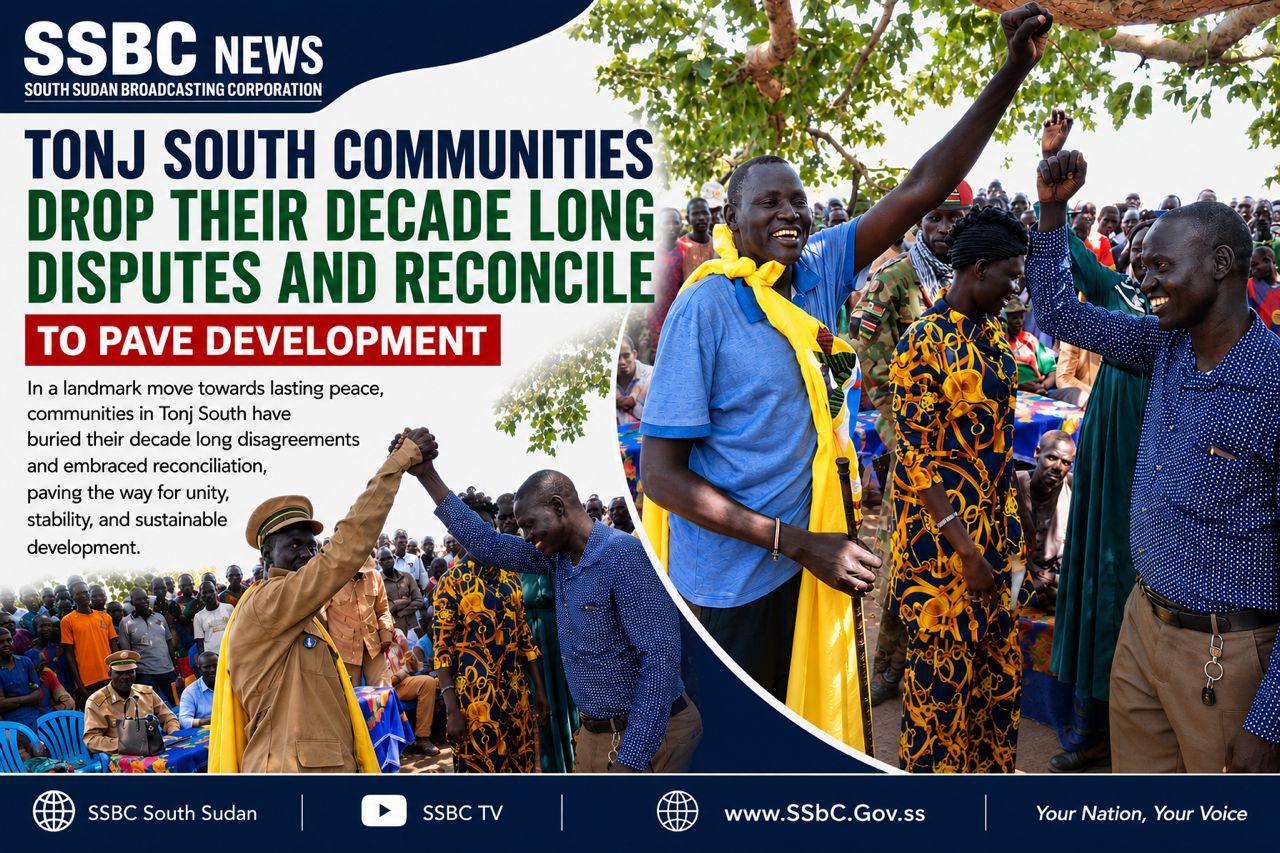
The persistent and destructive disputes have claimed lives, particularly among the youth, while undermining social cohesion and weakening economic and social development in the area.The reconciliation programme, spearheaded by the current Tonj South County Commissioner, Makuer Tiau Anyuon, brought together youth, cattle-camp leaders, and chiefs from Apuk Juwir, Thony, Mok, Yar and Bongo to address the root causes of communal conflicts and identify possible solutions.The approach included granting local amnesties to cattle-related criminals from both sides to participate in peace efforts. This led to the voluntary return of some individuals to county authorities, where they presented testimonies as part of the peace and reconciliation process. Most of them reportedly vowed to renounce violence and embrace peaceful coexistence.According to county authorities, some of the individuals will be trained and integrated into community policing structures to help safeguard law and order ahead of the elections. The initiative has been welcomed by local authorities believing it could help reshape young people’s understanding of peaceful coexistence and community responsibility.Meanwhile, county and local authorities are conducting peace rallies across the Thiet, Manyang-Ngok, Malual Mok, Mabior Yar and Agugo areas to sensitise communities about their shared efforts to end violence, rebuild trust and restore the social fabric of communities affected by years of conflict.
News
Tonj South communities have finally buried their decade-long disagreements over disputed water and grazing zones and embraced reconciliation to pave the way for development.