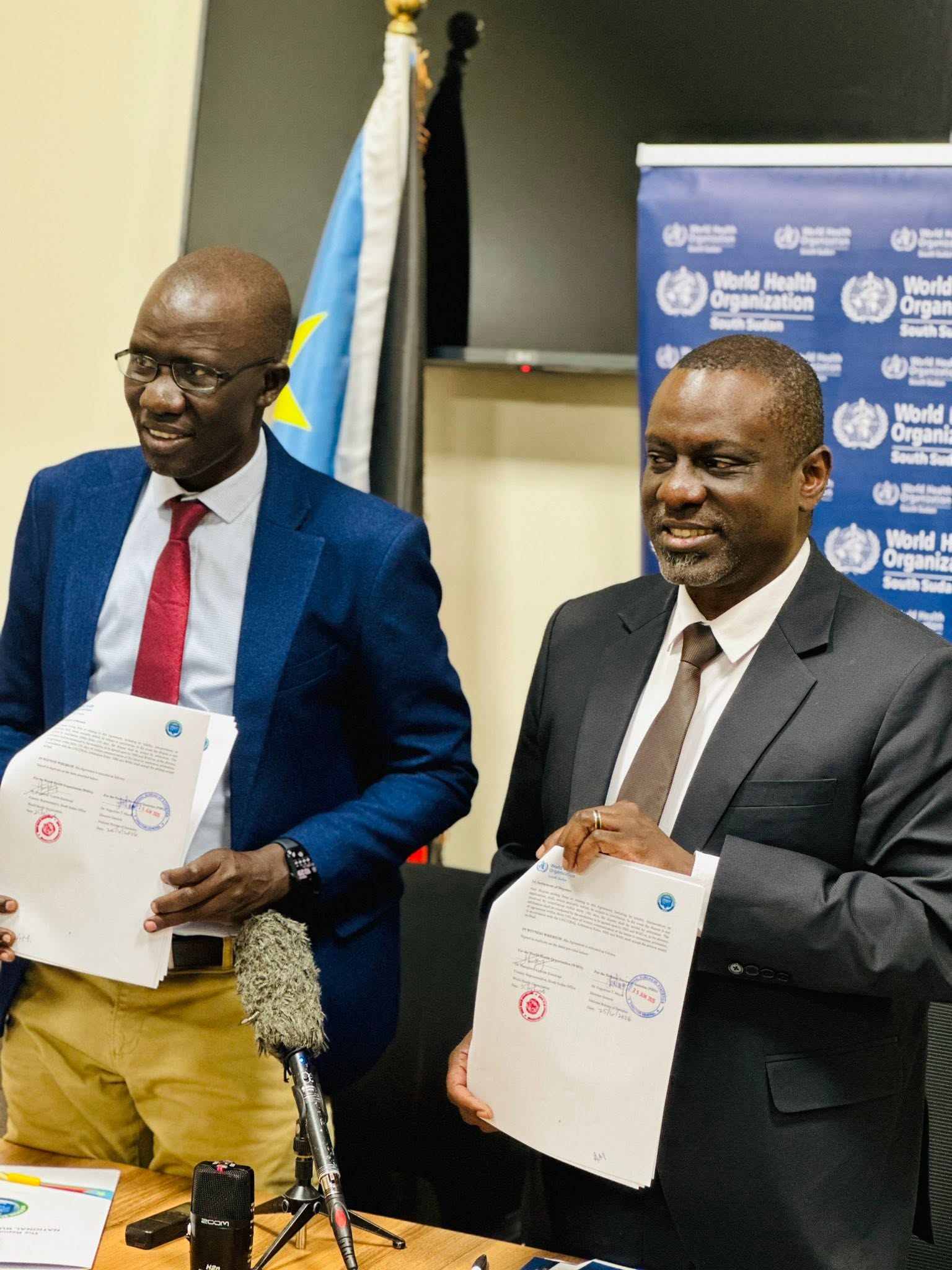
The National Bureau of Statistics and the World Health Organization Country Office in South Sudan sign a Project Collaboration Agreement aimed at strengthening the country’s health information systems and improving evidence-based planning and policymaking. The partnership establishes a framework to enhance statistical capacity and support data-driven decision-making across the health sector. The initiative links survey data with localized health service delivery to help policymakers identify underserved communities, expand grassroots interventions, and assess financial protection for vulnerable households.
Under the agreement, the two institutions collaborate in key areas including health-related research and surveys, statistical analysis and knowledge production, institutional capacity building, health systems and financing analysis, as well as data quality and governance.
Director General of the National Bureau of Statistics, Dr. Augustino Ting Mayai, describes the agreement as a practical step toward building a more coordinated and nationally driven approach to generating evidence in the health sector.
The WHO Representative to South Sudan, Dr. Humphrey Karamagi, says investment in statistics is an investment in health, emphasizing that stronger data systems contribute to better policies, improved programs, and stronger health outcomes for the country.